A couple of years ago I started creating and posting a series of cards branded Minor Stars. Over time, other projects turned my attention away, as a result, it has been a long time since I have posted one. That all changed this morning after I discovered this superb minor league image of the great Dave Parker.
Here is a 22 year old "Cobra" as a member of 1973 AAA Charleston (WV) Charlies:
This 1973 Charleston team was managed by former Red Sox manager Joe Morgan and stacked with future major leaguers including Art Howe, Ed Ott, Bruce Kison and Frank Taveras. Interesting to note that Parker wasn't the most productive power hitter on the team, as the late Tony Solaita led the team in home-runs, RBIs, and OPS.
Showing posts with label Pirates. Show all posts
Tuesday, May 28, 2013
Tuesday, May 14, 2013
Infographic: Dress like a 1979 Pirate
The uniforms of the Pittsburgh Pirates from 1977 through 1984 have always fascinated me. Even as a Phillies fan, I found the seemingly endless black/gold/pin options both ghastly and irresistible. It started the first time I saw this (May 1977) Sports Illustrated with Dave Parker in the unbelievable combination of gold pants and a pin stripped jersey. Suddenly the embarrassing uniforms we had to wear on my little league team weren't so bad.
I always knew that I was not alone in my adoration of this "bumblebee" period for the Pirates. A couple of weeks ago, while watching the 1977:This Week in Baseball DVD I started thinking how difficult it would be to document each and every game for these Pirates. I commenced working on through 1977 season, using a variety of sources such as the Google newspaper archive of the Pittsburgh Press and Post-Gazette. It was painstakingly tedious work and you quickly develop a great appreciation of the national media coverage available today for major league baseball.
I got about 60% of the 1977 season done before I discovered that this project had already been conceived and accomplished by a similarly obsessed baseball uniform fan. Jerry Wolpe is the founder and research guru behind the website BucTracker. He completed the incredible feat of recording a game by game account of each and every uniform the Pirates wore during this seven year period. This work is mind-blowing and far ahead of anything I could hope to create.
Since Jerry had already done the heavy lifting, I decided to turn my attention to something better suited for my graphical nature. More than any other Pirate team in that era, the 1979 "We Are Family" squad was the most memorable. Led by Willie Stargell, these guys pounded their way to what could be the last World Series trophy in Pirate history. Using the uniform data research provided by BucTracker (augmented by a little bit of pattern determination/guess work to fill in the blanks) -- I created this infographic detailing the173 (thanks Jangler!) 172 game uniform choices of the 1979 Pittsburgh Pirates.
I always knew that I was not alone in my adoration of this "bumblebee" period for the Pirates. A couple of weeks ago, while watching the 1977:This Week in Baseball DVD I started thinking how difficult it would be to document each and every game for these Pirates. I commenced working on through 1977 season, using a variety of sources such as the Google newspaper archive of the Pittsburgh Press and Post-Gazette. It was painstakingly tedious work and you quickly develop a great appreciation of the national media coverage available today for major league baseball.
I got about 60% of the 1977 season done before I discovered that this project had already been conceived and accomplished by a similarly obsessed baseball uniform fan. Jerry Wolpe is the founder and research guru behind the website BucTracker. He completed the incredible feat of recording a game by game account of each and every uniform the Pirates wore during this seven year period. This work is mind-blowing and far ahead of anything I could hope to create.
Since Jerry had already done the heavy lifting, I decided to turn my attention to something better suited for my graphical nature. More than any other Pirate team in that era, the 1979 "We Are Family" squad was the most memorable. Led by Willie Stargell, these guys pounded their way to what could be the last World Series trophy in Pirate history. Using the uniform data research provided by BucTracker (augmented by a little bit of pattern determination/guess work to fill in the blanks) -- I created this infographic detailing the
Click on image for full sized version
Labels:
Fun stuff,
Infographic,
Pirates,
uniforms
Thursday, March 7, 2013
Wednesday, March 6, 2013
Happy Birthday Pops!
Born on this day in 1940... Wilver Dornel Stargell.
"If he asked us to jump off the Fort Pitt Bridge, we would ask him what kind of dive he wanted. That's how much respect we have for the man."
- Pirate teammate Al Oliver

"If he asked us to jump off the Fort Pitt Bridge, we would ask him what kind of dive he wanted. That's how much respect we have for the man."
- Pirate teammate Al Oliver

In April of 1971 the Phillies moved from old Connie Mack Stadium into their sparkling new home in south Philadelphia. The club was still very early in the rebuilding process that would eventually result in the 1980 world championship. But on June 25th 1971 the first place Pittsburgh Pirates had arrived at the Vet for a weekend series.
Jim Bunning was the Phillies starting pitcher and was on the downside of his hall-of-fame career. The Pirates scored three runs in the tops of the first inning, initiated by a Stargell RBI double. In the top of the second inning, Bunning's struggles continued as he had already given up home runs to shortstop Jackie Hernandez and third baseman Richie Hebner. Near the end of his rope, Bunning didn't want to give Stargell another fastball. Instead, catcher Tim McCarver called for an offspeed slider that Stargell crushed the longest and one of the most memorable home runs in Veterans Stadium history.
Bunning later stated it was "a high slider that I used to get Stargell out on, only I didn't throw it hard enough and didn't get it in. It got over the fat part of the plate. He couldn't hit it any further."
Larry Bowa was playing shortstop, but because of the overshift deployed against Stargell was playing on the right side of the infield added "That ball was still going up. As an infielder, when a guy hits one that you know is a home run, you give it a casual look. When he swung, you didn't take your eyes off it because you wanted to see where it was going. It was majestic. I couldn't believe how far that ball went. It would take me three swings to get one up there -- from second base."
Legend has it the ball is actually still flying, having only left a star in section 601 on its way into orbit. Willie Stargell was the last hitter Bunning would see that Friday night. Phillies manager Frank Lucchesi immediately went to the bullpen, replacing him with righthander Lowell Palmer. The Pirates won the game 14-4. Stargell would go on to win the NL HR crown. The Pirates would go on to win the World Series. Bunning would retire at the end of the season and the Phillies would lose 95 games.
Universally regarded as one of the best human beings in baseball, the Phillies had a special honor in store for Willie when made his final appearance at the Vet in September of 1982. The Phils, arch-rivals of his Pirates, had placed a star to hold the spot where the longest home run in stadium history was last seen before it ascended into orbit.
Willie died in 2001. The Phils mourned by painting the circle holding Willie's star in section 601 black. The star remained until the stadium's 2004 demolition.
Labels:
Contemporaries,
Fun stuff,
Pirates,
Video
Monday, December 31, 2012
Roberto Clemente
Forty years ago today, an overloaded plane crashed into the sea off the coast of Puerto Rico. The plane was filled with humanitarian aid supplies for the people of Nicaragua devastated by an earthquake and the greatest right fielder in the history of baseball. Rest in peace, Roberto.
“I want to be remembered as a ballplayer who gave all he had to give.”
~ Roberto Clemente
Labels:
On this day,
Pirates,
Roberto Clemente,
Wallpaper
Saturday, August 18, 2012
Happy Roberto Clemente Day 2012
"I am convinced that God wanted me to be a baseball player...
I was born to play baseball."
~ Roberto Clemente
I was born to play baseball."
~ Roberto Clemente
Labels:
Birthdays,
Pirates,
Roberto Clemente
Sunday, July 8, 2012
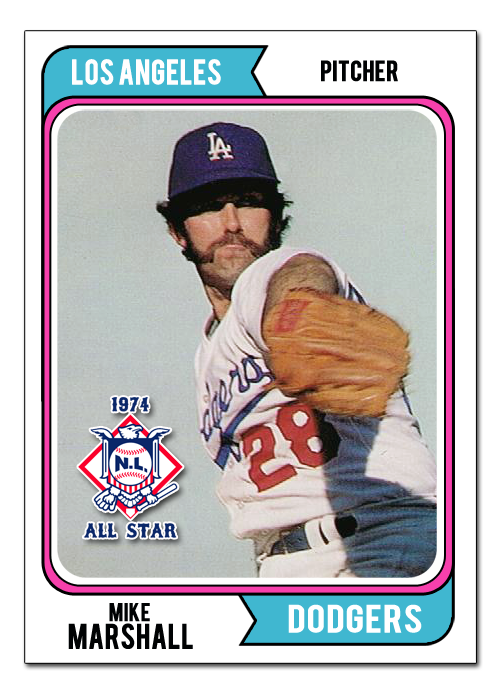
1974 All Star Project: NL Bullpen
Finishing the 1974 All Star Project with the National League pitching staff.
Interesting in seeing all the cards for this project? You can view them here.
| Ken Brett: George Brett's older brother played in the majors for 14 seasons, on 10 different teams. 1974 was the only All Star team he would make. A great hitter, his .310 batting average was higher than six of the eight starting position players on the Pirates in 1974, a team that won the National League Eastern division title. Ken was credited with the win in this game, pitching scoreless 4th and 5th innings. | |
| Buzz Capra: Like Ken Brett, 1974 was the only All Star game Buzz Capra would make. He was in the middle of best big league season, he would finish 16–8 with a NL leading 2.28 earned run average. He did not pitch in the game. | |
| Steve Carlton: A dominate ace, Lefty would be named to 10 All Star games and win 4 NL Cy Young Awards during his Hall of Fame career. In 1974 he led the NL with 240 strikeouts. He did not pitch in the game. | |
| Mike Marshall: The leading bullpen workhorse in the National League, Marshall made the All Star team in both 1974 and 1975. He led the league in appearances 4 times, including a record 106 games in in 1974. He was also named the Cy Young Award winner in 1974. In this game, he pitched the final two innings without giving up a run. | |
| Jon Matlack: This was the first of what would be 3 consecutive All Star appearances for the Mets lefthander. He would win the MVP of the 1975 game. He pitched a scoreless sixth inning for the NL. | |
| Lynn McGlothen: Appearing on his only career All Star team, Lynn McGlothen would finish the season with a 16–12 record with an impressive 2.70 ERA. He pitched a perfect 7th inning for the NL. | |
| Steve Rogers: As the lone rep for the lowly Expos, this was the 1st of 5 career All Star appearances for Rogers. He would end the season with a league leading 22 losses. In 1982, he would start the the All Star Game for the NL. He did not pitch in this game. |
Interesting in seeing all the cards for this project? You can view them here.
Labels:
All Star Game,
Braves,
Cardinals,
Dodgers,
Expos,
Fantasy Baseball cards,
Mets,
Phillies,
Pirates
Saturday, March 24, 2012
DAHOF Top 100 -- #13 Roberto Clemente
The first time I can recall hearing about and seeing highlights of the man was around 1977 in the midst of a long Cubs game rain delay broadcast. This was before cable TV and 10,000 available channels. WGN passed the time by showing old baseball films. The sight of his cannon arm shooting lasers from right field was incredible. I can recall, even as an 11 year old kid, the almost overwhelming feeling of sadness and loss when I learned how and why this great ballplayer had died.
Less than a month after his death, The Great Clemente was elected to the Baseball Hall of Fame in a special election. He is one of three players (Babe Ruth and Lou Gehrig being the others) to be inducted without the mandatory five year wait. On May 13, 1973 he would receive the Congressional Gold Medal, the first baseball player so honored. The very next day, he became the first individual of any description to receive the Presidential Citizens Medal, an award newly minted in his honor. The citation read:
All who saw Roberto Clemente in action, whether on the diamond or on the front lines of charitable endeavor, are richer for the experience. He stands with that handful of men whose brilliance has transformed the game of baseball into a showcase of skill and spirit, giving universal delight and inspiration. More than that, his selfless dedication to helping those with two strikes against them in life blessed thousands and set an example for millions. As long as athletes and humanitarians are honored, Roberto Clemente’s memory will live; as long as Citizens Medals are presented, each will mean a little more because this first one went to him.There are two frames that have hung in my son's bedroom since the day we brought him home from the hospital. One holds one of my long departed grandmother's bank deposit slip signed by Mike Schmidt, Greg Luzinski, Dave Cash, Larry Bowa, and Garry Maddox during a 1976 event at a Hershey area mall. The other is a majestic portrait of Roberto Clemente with his head bowed and his black Pirates hat over his heart.
Tuesday, March 6, 2012
Happy Willie Stargell Day
Now I know why they boo Richie all the time.
When he hits a home run, there's no souvenir...
Spring Training 1970
DAHOF Top 100 -- #27 Dave Parker
At some point, unaware of strat-o-matic or any other similar games, we created a simple dice based baseball game using our expansive collection of baseball cards. Our little game developed into a fantasy draft and an eight team fantasy league complete with rosters and lineups. We even created team names and logos. I named my team the Houston Stars, accompanied by the Astrodome's Home Run spectacular featured in the second Bad News Bears movie.
About halfway through our schedule, hovering around .500 (which would make sense, considering the game was based on totally random numbers from rolling dice) -- I decided I really needed to shake-up my team. One morning I woke up 100% convinced the only player that could possibly make the difference for my lineup was NL batting champ Dave Parker. I was determined to get him, no matter the cost. I ended up packaging 5 or 6 players to persuade my friend to allow Parker join the Houston Stars.
In the end, Parker's performance met my expectations and "the Cobra" graphics looked great on my imaginary Astrodome scoreboard. He and Steve Garvey got hot and propelled my team into our fantasy playoffs... where I predictably suffered a humiliating defeat to a lesser team. In this case, fantasy was just a little to close to reality.
Sunday, January 29, 2012
DAHOF Top 100 -- #55 Willie Stargell
For me, Game 7 of the 1979 World Series was inconveniently played on a Wednesday night during the school year. The era of every World Series game played under the natural light of the sun had given way to the draw of prime-time. I got to watch a few innings on TV, but could not convince my parents that I should be allowed to break the routine of my sleep schedule. They didn't care it was the seventh game, I had to go to school in the morning. It really didn't matter, I had covertly been listening in the dark to ballgames on my transistor radio for years. Looking back, trading the ABC television crew of Keith Jackson, Howard Cosell, and Don Drysdale for the CBS radio voices of Vin Scully and Sparky Anderson was a pretty fair exchange.I was pulling for the funky black and gold clad Pirates, temporarily forgiving them for rudely supplanting my Phils as NL East Champions. After falling behind the Orioles 3 games to 1, Pittsburgh righted their ship and came storming back to force the deciding game. Appropriately they were behind 1-0 in the fifth inning when I finally stomped up the stairs to my room. Baltimore's #8 hitter Rich Dauer had homered in the bottom of the third and it looked like the O's starter Scott McGregor was going to make it stick.
By the time I settled under the covers and set the radio volume to a safe enough level to prevent detection the game had moved to the sixth inning. Bill Robinson collected a bad hop single with one out, I had that giddy feeling of anticipation knowing that Willie Stargell was coming to the plate. Pops had basically carried the Pirates the entire season. He had already singled and doubled in the game and was experiencing one of those hot streaks you can only dream about. On McGregor's first pitch, a low fastball, Willie turned on it... blasting it high into the cold Baltimore night. It landed in the Pirates bullpen behind right center field fence. Pirates lead 2-1. I smiled and quietly clapped my hands.
Pirates Manager Chuck Tanner stayed with middle man Grant Jackson for the 6th, 7th, and into the 8th before Kent Teckulve came in to close the door and fulfill the 1979 "We Are Family" Pirates destiny as World Champs.
Saturday, December 31, 2011
Forever 21
Thursday, November 24, 2011
Familiar Faces / Strange Places: Luis Tiant / Pirates
Yesterday was Luis Tiant's birthday. If you have not seen the recent documentary called The Lost Son of Havana, I would strongly recommend you do it. It is a very compelling story about the man they call "El Tiante".
Luis Tiant is the only child of Luis Tiant, Sr. and Isabel Vega. From 1926 through 1948, the senior Tiant was a great left-handed pitcher for the Negro League's New York Cubans during the summer and the Cuban professional league's Cienfuegos in the winter.
He made his big league debut as a Cleveland Indian in July of 1964. He won 21 games for the Indians in 1968, leading the American League with in ERA. His 1.60 ERA was the lowest in the American League since Walter Johnson's 1.49 mark during the dead-ball era in 1919. The next season he lost 20 games while fighting through injuries and was traded to the Twins.
He won his first six games with the 1970 Twins, and then broke his scapula, ending his season and what many believed his career. The Twins cut him during spring training of 1971. The Braves signed him to a minor league contract to play with their Triple-A team in Richmond, where he pitched well enough to catch the eye of the Boston Red Sox, who grabbed him in May. Despite struggling through the rest of 1971 with a 1-7 record and 4.88 ERA things were looking up for Luis.
In 1972 Tiant regained his old form with a 15-6 record and led the league with a 1.91 ERA. He would win 20 games in 1973 and 22 in 1974. However it was in 1975 he became one of the greatest and most beloved pitchers in Red Sox history.
Though hampered by back problems in 1975, he won 18 games for the AL Champions. He excelled in the postseason, beating the three time defending World Champion Oakland A's in a three-hit complete game. He followed that up when he opened the World Series shutting out the Reds 6-0. It was a special night because his father and mother were in the stands time watching him pitch in the US for the first time -- having been allowed to visit from Cuba under a special visa.
Tiant also won Game 4 (throwing 163 pitches in his second complete game of the series) and had a no-decision in the memorable Game 6, which ended with Carlton Fisk’s dramatic game-winning walk-off home run in the 12th inning.
Tiant went 21-12 in 1976, 12-8 in 1977, and 13-8 in 1978. At the end of the 1978 season, Tiant signed as a free agent with the Yankees where he compiled a 21-17 record over two seasons (1979-80)
After the 1980 season, the Yankees released him. He signed with Pittsburgh in 1981, but spent most of the season in Portland where he excelled for the Beavers (13-7, 3.82) including a no-hitter. He got called up, but struggled with the Pirates and was released at the end of the season. He finished up his major league career with six games for the 1982 Angels, with his final win coming against the Red Sox on August 17.
In the end, Tiant won more games in the major leagues than any other Cuban-born pitcher in the 20th Century, having 35 more than Dolf Luque and 44 more than Mike Cuellar. He was third among all Latin American natives, trailing Dennis Martinez (245) and Juan Marichal (243).
Labels:
Familiar Faces / Strange Places,
Pirates
Tuesday, November 22, 2011
My cards: 2012 Gerrit Cole
What a nice way to start a long holiday weekend! A baseball photography colleague alerted me to this Cardboard Connection post from yesterday. The Gerrit Cole autograph card they are previewing is one of my images.
The actual picture was taken during one of the early games at the 2010 College World Series in Omaha. UCLA went all the way to the finals, but lost to South Carolina. I am very impressed with the quality of the photoshop airbrushing by the artists at Topps. Quite an improvement over what we have grown up with.
Thursday, November 10, 2011
The Matt Stairs Project
When Matt Stairs retired from baseball in August, I posted this in recognition of his contribution to the 2008 Phillies World Series win. As I was looking up his career stats for the post, I realized that he might have the longest display of uniform numbers of any player on BaseballReference.com. All told Stairs played for 12 different teams -- 13 if want to separate the Expos franchise he debuted for from the Nationals that he finished with. According to the fine folks a BR.com, Stairs wore 19 different uniform/number combinations during his career.
Former players Mike Morgan, Ron Villone, Deacon McGuire each played for 12 different teams. Morgan's uni/number combo count finished at 17, Villone got 14, and McGuire retired in 1912, several years before a major league team even issued uniform numbers. The only active player that is even close to Stairs is Miguel Cairo, his 2011 season with the Reds put him up to 14.
I thought it might be fun to create a set of Matt Stairs cards - showing him with every major league team he played for. Rather than drive myself crazy attempting to create new templates for each year, I decided to simply go with a 1968 Topps design. Matt Stairs was born in 1968.
1992 - 1993: Montreal Expos
Stairs makes his big league debut on May 29th, 1992 with the Expos in Cincinnatti. Appropriately he enters his first game as a pinch hitter. | |
1995: Boston Red Sox
After spending some time in Japan, Stairs is purchased by the Red Sox. He spends all of 1994 in the minors and returns to the big leagues in June. Hits his first ML Home Run off of the Royals Tom 'Flash' Gordon on July 5th, 1995. He gets one AB in the Red Sox 1995 ALDS loss to the Indians. | |
1996 - 2000: Oakland A's
Signs as a Free Agent with the A's following the 1995 season. It is in Oakland that Stairs establishes himself as a real live professional hitter. It is also the first place he finds regular playing time and he produces 122 HRs & 385 RBIs over his 5 seasons wearing the green and gold. | |
2001: Chicago Cubs
Following the A's bitter 2001 ALDS loss to the Yankees, Stairs is traded to the Chicago Cubs for a minor league pitcher named Eric Ireland. He spends one season on Chicago's North Side, delivering 85 hits in 128 games. | |
2002: Milwaukee Brewers
Once again a Free Agent, Matt signs with the Brewers for the 2002 season. Nothing spectacular happened for him while suffering through 106 losses playing for a last place team. | |
2003: Pittsburgh Pirates
Another season, another team. Now 35 years old, Matt signs with the Pirates as a Free Agent in December 2002. He had the best batting average of his career, hitting .292 in 128 games playing as a first baseman and outfielder. He also tops the 20 HR mark for the 5th time in his career. | |
2004 - 2006: Kansas City Royals
Matt continues his tour of the Major Leagues when he signs as a free agent with the Royals. He practically puts down roots and stays in KC for two and a half seasons. On June 2nd, 2005 -- against the Yankees he leads off the bottom of the sixth inning and sends a Carl Pavano pitch deep into the night for his 200th career HR. | |
2006: Texas Rangers
In July of the 2006 season, for the first time in his career, Matt Stairs joins a new team in the middle of the season. The Royals made a deadline deal with Texas, who had hoped Stairs could provide some veteran leadership on their young club. He just played in 26 games and hit only .210 before getting waived in September. | |
2006: Detroit Tigers
Claimed off the waiver wire by Detroit, Stairs joins his 3rd team of the 2006 season. The Tigers grabbed him in hopes he could help them hold their division lead. He appears in 14 games and the Tigers lost their division lead on the final day of the season, but still clinched the Wild Card. Since he was acquired after August 31st deadline, he was unable to play for the Tigers during the playoffs or World Series. | |
2007 - 2008: Toronto Blue Jays
After the 2006 season, the 39 year old Stairs once again found himself on the market as a free agent. In December he signed with the Blue Jays, returning to his native Canada. During the season and a half he spent in Toronto he found regular playing time, delivering 21 HRs in 2007 with an impressive .921 OPS. Following his strong 2007 season the Jays gave him a 2 year deal, but it didn't work out as he was released in August. | |
2008 - 2009: Philadelphia Phillies
Looking to add depth to their bench, the Phillies picked up the suddenly available Stairs in late August of 2008. He appeared in 16 games as the Phils won the NL East. Playing in his first playoffs since 2001, Stairs created a lasting memory with his first career postseason home run in Game 4 of the NLCS. His monster blast allowed the Phillies to take the lead over the Dodgers and win the game. That season he won the only World Series ring of his 16-year career. He returned in 2009 as a hero. On April 12th he hit a game-winning home run against the Rockies. It was the last home run called by Harry Kalas. | |
2010: San Diego Padres
In January, Stairs agreed to a minor league contract with the San Diego Padres with an invite to spring training hoping to crack their 25-man roster. He made the club out of spring training as a left-handed bat off the bench. On August 21st, Stairs hit his 21st career home run as a pinch hitter, breaking a tie with Cliff Johnson and setting a new Major League record. | |
2011: Washington Nationals
In December, Stairs signed a non-guaranteed minor league contract with the Washington Nationals. He made the club in spring training and went north with the team. Mostly used as a pinch-hitter, with four appearances at first base, in 65 at-bats he had 10 hits and two RBIs. He was designated for assignment on July 27, 2011 and released on August 1st. Two days later he announced his retirement. |
Thursday, November 3, 2011
The Man Behind the Mask
My first crack at a 1979 Topps card with an explanation from Paul Lukas on ESPN.comThe year was 1978 and the player was Dave Parker of the Pirates, who would be named the league's MVP at the season's conclusion. But there was a slight detour on the way to that award, and it came in the form of a home plate collision with Mets catcher John Stearns on June 30. The play knocked Parker out of the lineup with a fractured jaw and cheekbone.
"He wanted to play again right away, so I knew I had to come up with something fast," recalls Tony Bartirome, who was the Pirates' trainer at the time. "If he'd had his way, he would have missed only four games."
Parker ultimately sat out a little over two weeks. But when he returned to action on July 16, something was different -- like, very different. That photo is from Parker's first game back, when he pinch hit in the 11th inning while wearing a hockey goalie's mask. He was intentionally walked, leading to a macabre spectacle on the bases. The "Friday the 13th" movies didn't yet exist in 1978, but Parker was already perfecting the art of masked menace. It marked the beginning of a bizarre chapter in uniform history, a summerlong series of creative headgear experiments that had opposing teams asking, "Who was that masked man?"
Monday, October 24, 2011
Parade of Ridiculousness: Clemente dressed as a bumble bee
The tragic death of Roberto Clemente in December 1972 forever immortalized the original black and white version of this image. Here you see the great Clemente acknowledging the ovation of the Pirate fans following his 3000th hit.
It was September 30th, 1972, the Pirates had clinched the NL East title 9 days earlier -- but Clemente provided some more drama for the home fans after a long injury plagued season (he only played 102 games) when he laced a double to left center field to lead off the 4th inning for the milestone hit. At the time, no one knew it would be the last (regular season) at-bat and last (regular season) hit of his career. Because Pirate Manager Bill Virdon pinch hit for him (using soon to be retired and future Hall of Famer Bill Mazeroski) before his next turn came up in the game. He did not play in the final three games of the season.
Even though he was still a very productive player when he was playing in 1972, there is no disputing the fact at age 38 -- Clemente was nearing the end of his career. If he had not died, I highly doubt he would have been an active player in 1977 when the Pirates entered their Bumble Bee fashion era. However, I always wondered what he would have looked like sporting these colorful fashion disasters.
Wonder no more Pirates fans.... Roberto Clemente even looked great even wearing those hideous late 1970's all yellow Pirates uniforms.
Labels:
Parade of RIdiculousness,
Pirates,
Roberto Clemente
Thursday, October 13, 2011
Thursday, September 1, 2011
On This Day... Danny Murtaugh proves he is color blind
September 1st, 1971. Twenty Four seasons after Jackie Robinson broke baseball's color barrier, the Pittsburgh Pirates became the first Major League franchise to field an all-minority starting nine. With two newspaper strikes and only 11,278 fans in attendance, the game, a 10-7 win over the Phillies did not receive a great deal of recognition at the time. Here is a story from a 1995 issue of Baseball Digest that provides some details.
The next day's Philadelphia Evening Bulletin ran the headline "Pirates Starters All Black" and quoted Pirates Manager Danny Murtaugh as saying, "When it comes to making out the lineup, I'm color blind and my athletes know it. They don't know it because I told them, but they know it because they are familiar with the way I operate."
Some good quotes I have found today on this little known, yet significant historic event:
- Al Oliver said he had no idea until early in the game, when he turned to Dave Cash and said something to the effect of, "Hey, we got all brothers out here!"
- Gene Clines said he heard a batboy say, "The Homestead Grays are playing tonight," referring to the famous Negro League team.
- Richie Hebner says “Some of the guys joked around the clubhouse, saying, ‘Hey, you white guys, you can take a rest tonight’..."
Thursday, August 18, 2011
Happy Roberto Clemente Day
Today would have been Roberto Clemente's 77th birthday. I was too young to remember seeing him play live, but from what I have seen on highlights and read about him, he was a very special man.
Labels:
On this day,
Pirates,
Roberto Clemente